Joint replacement, where China's advantage is clearest.
The same global implants, surgeons who operate weekly, and a two-week supervised stay — at a third of the US price. The main risk is not the surgery; it is the itinerary.
China is one of the best value destinations in the world for knee and hip replacement. A unilateral knee replacement at a top public hospital typically runs $9,000–16,000 including implants and a two-week stay, against $35,000–50,000 in the United States. The main risk is not the surgery; it is flying home too early.
What China does differently
Case volume per surgeon
A senior arthroplasty surgeon at a major Chinese hospital may perform several hundred joint replacements a year, against a US average closer to 65. Repetition matters in alignment, soft-tissue handling and speed of recovery. Ask for the surgeon's annual volume in your specific procedure, not the department's.
Implants are not all equivalent
Chinese hospitals offer imported implants from Zimmer Biomet, Stryker, Smith & Nephew and DePuy, alongside domestic implants $2,000–4,000 cheaper. The bearing surface matters more than the brand. Robotic assist adds $1,500–3,000. Ask which implant is included, in writing, before comparing prices between hospitals.
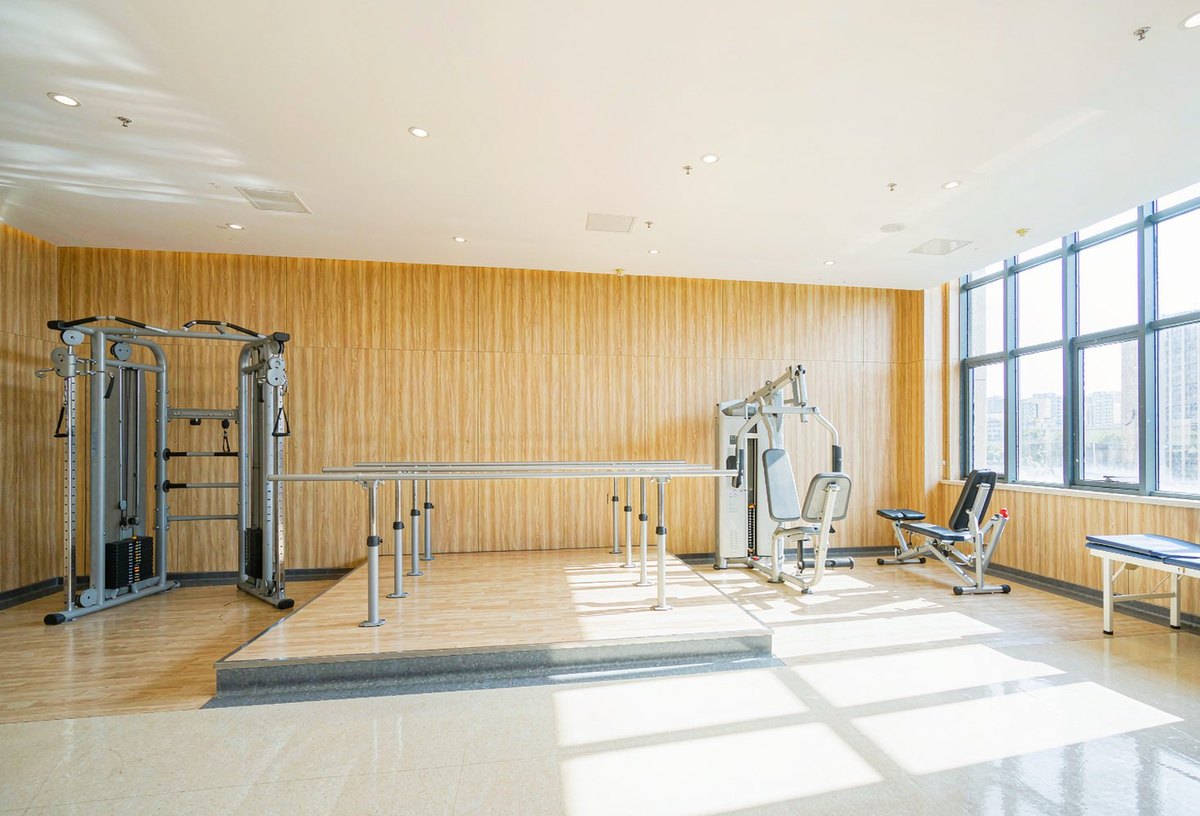
Longer inpatient rehabilitation
Chinese hospitals typically keep joint replacement patients 10 to 14 days including supervised physiotherapy. That is one reason the all-in cost still compares well, and it reduces the risk of returning home with an unmanaged wound or an unassessed swelling.
Where to go
- Beijing Jishuitan Hospital — China's best-known orthopaedic centre; joint reconstruction, spine and sports injury
- Peking Union Medical College Hospital, Beijing — complex revisions and patients with multiple comorbidities
- Shanghai Ninth People's Hospital — complex reconstruction and limb salvage — not routine replacement
- West China Hospital, Chengdu — very high volume at 15–25% below Beijing and Shanghai pricing
- Nanfang Hospital, Guangzhou — a long-established foreign-patient unit
We are independent. No hospital pays for inclusion, and none of these entries implies a partnership or endorsement. International-department availability changes; we confirm it case by case.
What it costs
| Item | Planning range (USD) | Typical inpatient stay |
|---|---|---|
| Knee replacement (one knee) | $9,000–16,000 | 14 nights |
| Hip replacement | $10,000–17,000 | 14 nights |
| Spinal fusion (single level) | $12,000–22,000 | 16 nights |
Planning ranges for public tertiary international departments, Beijing/Shanghai baseline. The implant brand and bearing surface move the quote by thousands; domestic implants cost $2,000–4,000 less than imported. Not quotations.
Timeline
Two to three weeks in China is typical for a knee or hip: pre-operative testing in the first three days, surgery within the first week, then supervised rehabilitation. Spinal fusion needs three to four weeks. Do not book a return flight before the surgeon gives a clearance date — 10 to 14 days after joint replacement is a common minimum, longer after fusion.
Who should not come
- Anyone with an active infection, including dental infection, which must be treated before an elective implant.
- Patients with severe, unstable cardiac or respiratory disease who cannot tolerate anaesthesia away from home.
- Anyone expecting immediate surgery on arrival. Pre-operative testing takes days, and the surgeon may change the plan after examination.
- Patients who cannot commit to rehabilitation. The operation is half the outcome; the physiotherapy is the other half.
The rehab question
Ask any provider before you book: how many physiotherapy sessions are included, whether they are supervised by a therapist or a nurse, and what the written home exercise plan looks like. A cheap package that discharges you on day four with a printed sheet is not a bargain.
Plan the first four weeks at home, too. You will need help with stairs, shopping and dressing. Patients who live alone and fly back to an empty apartment consistently have a harder recovery.
The answers we would want.
Can I have both knees replaced at once?
Sometimes, for fit patients. It doubles the anaesthetic and rehabilitation burden, and most surgeons prefer to stage the operations four to six weeks apart. Let the surgeon decide after examining you — deciding this before you travel usually means deciding it wrong.
Are the implants the same as in the US?
The same companies — Zimmer Biomet, Stryker, Smith & Nephew, DePuy — and often the same product families. Domestic implants are cheaper and less documented in long-term registries. Get the exact model and manufacturer in writing before you commit, and keep the implant card from your discharge pack.
How soon can I fly home after surgery?
Ten to fourteen days after joint replacement is a common minimum, longer after spinal fusion. Flying earlier raises the risk of deep vein thrombosis and leaves wound problems unmanaged. The surgeon sets the date — and some airlines require a fitness-to-fly note for recent surgery.
Last reviewed November 2026 · CMT Editorial Team · This page is general information, not medical advice.

Is joint replacement in China the right call for you?
Send your records for a free review. You will get a written specialist opinion, a hospital match and an itemised cost estimate — or an honest no.