Cancer treatment in China, where the volume is real.
Surgical oncology, high-volume radiotherapy and cellular therapy at centres that treat your tumour type weekly. With an honest view of who qualifies for what.
China is strongest in surgical oncology, high-volume radiotherapy, nasopharyngeal cancer, hepatobiliary cancer and — at a small number of centres — CAR-T and particle therapy. It is not a shortcut for access to experimental drugs, and foreign patients cannot access donor organs.
What China does differently
Surgical volume in specific tumour types
Chinese centres operate on far more oesophageal, gastric, liver and nasopharyngeal cancers than most Western hospitals see — the operation happens weekly, not monthly. For these tumours, repetition refines technique and complication management. For rarer tumours the advantage disappears; ask for the annual case count in your exact diagnosis.
Radiotherapy throughput and particle therapy
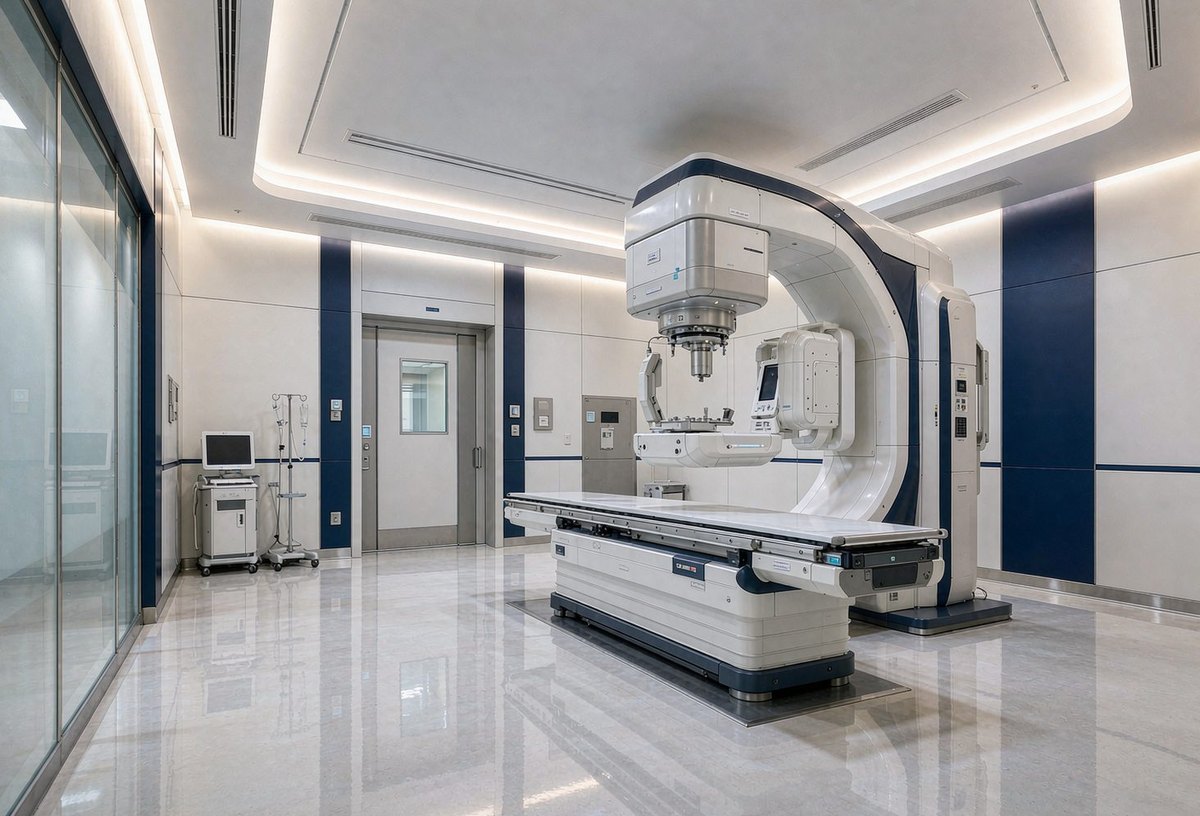
Linear accelerator capacity in major centres is substantial and waiting times are usually short. Shanghai has one of very few combined proton and heavy-ion facilities anywhere. Particle therapy is excellent for certain skull-base, paediatric, liver and prostate cases; the centre screens heavily and will decline cases that do not fit.
CAR-T and cellular therapy
China runs one of the largest CAR-T programmes in the world, concentrated in a handful of haematology centres such as Ruijin in Shanghai. Approved products are commercially available, priced well below US list prices but still six figures. Eligibility is narrow — mostly relapsed or refractory B-cell malignancies — and the complication profile, including cytokine release syndrome, is serious.
Where to go
- Sun Yat-sen University Cancer Centre, Guangzhou — the world's largest nasopharyngeal cancer practice; also strong in liver and lung
- Cancer Hospital, Chinese Academy of Medical Sciences, Beijing — thoracic and upper GI oncology, multidisciplinary review
- Fudan University Shanghai Cancer Centre — breast, GI and radiotherapy; a well-organised international office
- Ruijin Hospital, Shanghai — haematology and CAR-T; JCI-accredited
- Shanghai Proton and Heavy Ion Centre — particle therapy for selected skull-base, paediatric and liver cases
We are independent. No hospital pays for inclusion, and none of these entries implies a partnership or endorsement. International-department availability changes; we confirm it case by case.
What it costs
| Item | Planning range (USD) | Typical inpatient stay |
|---|---|---|
| Cancer surgery (moderate complexity) | $12,000–30,000 | 18 nights |
| Proton / heavy-ion therapy (course) | $35,000–65,000 | 45 nights |
| CAR-T therapy (approved product) | $100,000–160,000 | 30 nights |
Oncology costs vary more than any other specialty: they depend on stage, histology, whether surgery is combined with chemo or radiation, and the drug regimen. These ranges are starting points; a written estimate follows the specialist review.
Timeline
Expect three to four weeks from complete records to a treatment decision, and three to eight weeks in China. Pathology re-read adds three to five working days and is not optional. If you need surgery plus radiotherapy, plan for the longer end.
Who should not come
- Anyone without a confirmed histological diagnosis. Imaging alone is not enough to plan cancer treatment.
- Patients seeking a donor organ. This is not lawfully available to foreign patients in China.
- Patients hoping to enrol in a clinical trial as the primary reason for travel. Foreign enrolment is limited, and no coordinator can promise it.
- Anyone whose condition is deteriorating rapidly. Travel itself may be unsafe; ask your oncologist first.
What to send us
For a cancer case, the record set matters more than the narrative. Send the pathology report and the slides or blocks if they can be released, the imaging reports and the DICOM files, the operative notes for any prior surgery, and the full chemotherapy and radiotherapy history with drug names and cycles.
If your hospital will not release slides, ask for unstained slides or a tissue block. A Chinese centre will usually re-cut and re-stain rather than accept a foreign report at face value — and a missing block is the most common reason a cancer consultation stalls for two weeks.
The answers we would want.
Will a Chinese hospital accept my pathology report from home?
It will read it, but it will usually re-read the tissue. Treatment decisions in oncology depend on precise histology and molecular markers, and quality control differs between laboratories. Budget three to five working days and a few hundred dollars for the re-read.
Is CAR-T available to foreign patients?
Yes, at a small number of centres, for approved indications. It requires a haematology consultation, confirmed CD19 or BCMA expression depending on the product, and a stay of roughly four weeks with close monitoring. It is not a first-line treatment, and it is not risk-free.
Can I get treatment without speaking Chinese?
At an international department, yes, with a medical interpreter present at every clinical conversation. Outside those departments, oncology discussions are too complex for ad-hoc translation. We do not accept cancer cases without interpretation arranged.
Last reviewed November 2026 · CMT Editorial Team · This page is general information, not medical advice.

Is cancer treatment in China the right call for you?
Send your records for a free review. You will get a written specialist opinion, a hospital match and an itemised cost estimate — or an honest no.